I imagine it had something to do with the judge saying that the "US is the enemy", thus indicating that he could not impartially judge a case in which the U.S. was the primary opposing litigant.
Seems like the US want to abuse extradition here. If he's guilty of copyright infringement, then they should be able to get him in NZ. Extradition should only be for cases where someone is physically present in a country where they commit a crime then later skip the country to avoid being caught.
It shouldn't be for moving ones and zeros, but imagine this:
I figure out a way to shield a bomb from scanners and then mail a bomb to a hospital in the states. I kill hundreds. Would it not be reasonable for treaties to come in here?
I cannot think of a situation in which extradition of own national or citizen is justifiable. If a Ruritarian citizen sends a bomb from Ruritania to Poronia, Ruritarian authorities should jail him in a Ruritarian prison after a trial in Ruritarian court. Poronian authorities should at most assist the Ruritarian prosecutor.
When it comes to citizens of other countries just temporary residing in Ruritania, it may be more appropriate (cheaper, "not our problem") to just send them back, guilty or not, to be decided by a justice system in their own country. Preferably, after evaluating if there is a reasonable expectation of a fair trial.
Releasing them to some third party (in this case, a German citizen to US authorities) sounds absolutely awful to me. Barbaric from the perspective of the person being sent away, and servile from the perspective of sovereign people.
So you're implying that Ruritarian law includes explicitly laws against bombing foreign lands? How else do they try and lock him up? For the act of abusing the mail or the act of creating the bomb? I don't see how they can try him for the bombing itself -- it's not their country, not their jurisdiction.
I believe that jurisdiction matters, and where a crime is committed is jurisdiction.
I don't understand the jurisdiction grounds that Ruritaria would have on crimes committed in other countries.
If I were Poronian and a Ruritarian bombed my country and his government shielded him from Poronian justice -- I would call on my government to get his head. He gets tried in Poronian courts or he gets tried by Poronian missiles. But you don't get to commit a crime in Poronia and avoid the legal repercussions...
That's not "American" sentiment as much as it is a "Top Player" sentiment...
You're blaming a state for doing something you're own state would gladly do itself if it were able to (if it had the same platform).
If America lost the war of independence, then that wiki article would be called "British exceptionalism". And in another history, "Russian exceptionalism", or "Chineese exceptionalism", etc.
The country level game has always been about competition rather than sharing... Where the benefits are imported, and pain is exported. It all comes down to human nature.
The people don't need to buy into it though. I definitely don't and wouldn't. I expect fairness and don't abuse others in weaker positions than mine, not so hard on the individual scale.
So basically "it's all right because they'd do the same" simply doesn't cut it.
On an individual scale, you have to ask were your goodness is really coming from / what is it that allows it.
Do you like the big house you live in, electricity 24h/day, the plethora of food you can buy, the nice cars you drive, the crime-free white areas you can live in (or move into), having access and freedom to discuss issues such as this?
It all came out from competition, not personal niceness.
Not only that, but your "fairness" attitude is a product of all this. Without which you're life, and ideas about who you are, would be drastically different.
The rest of the world is a bad place (http://www.vice.com/the-vice-guide-to-travel/the-vice-guide-...), and everyone is in competition... Some people compete by being nice, others by accumulating wealth, some choose to impose their wills on others, etc. It's all the same, ego.
If you're interested, you don't have to go far in Buddhism to discover that all action is egotistical.
If you want to be truly fair, then drop out of this game called society; stop doing, and start being with silence and compassion.
If you love fairness, you should look into Marxist Communism.
Though it never quite works out the way you want it to...
Something about one bad (corrupt, not fair) apple spoiling the rest!
It's just an example, but the point is, human nature seems to always mess it up in the end for the fairness crowds. They just don't seem to be the right product/market fit for humans and their societies.
> Thing is, we can afford to be fair.
Yes you can! All thanks to the competition system that allows you to do so.
> It doesn't matter.
You can't separate the lives and actions of an individual and the society he/she is part of... They are related and integrated (for the most part). For the well-adjusted individuals, to the contrarians, the corrupt, the fair, and even for the rejects.
> Extradition should only be for cases where someone is physically present in a country where they commit a crime then later skip the country to avoid being caught.
Not talking about MU or anyone/anything else in particular, but...
If you run a criminal enterprise that does the majority of its business in the US, and you live overseas you can (and should be) subjugated to US laws.
Even for non-criminal enterprises, you don't get to play around with another country, breaking its laws. Why should a criminal enterprise be treated differently?
>If you run a criminal enterprise that does the majority of its business in the US, and you live overseas you can (and should be) subjugated to US laws.
>Even for non-criminal enterprises, you don't get to play around with another country, breaking its laws. Why should a criminal enterprise be treated differently?
Yes, I'm sure a lot of Iraqis would love to see American soldiers who killed/tortured their civilians judged in their own country. I have a feeling that you might change your tune on this one though... ;)
So millions of American women can be extradited to certain Arab nations because they've posted photos online of themselves without their heads covered, contrary to the local law.
By doing it on the internet, they are "exposing" themselves to millions of people where that is illegal, and therefore should be extradited for it.
Even the passport photo of millions of American women is illegal in certain countries... seeings that's an international document, surely they've broken the law in those countries, no?
I don't see the similarity of a person posting pictures of self on facebook, and a criminal enterprise knowingly and willfully generating revenue through copyright crimes.
Really, I don't. Even if you ignore that some countries have extradition treaties which spell out exactly at what level this can happen (btw, US and Iran don't).
But if you love analogies, I'm sure I can come up with one even more ridiculous, that would show my case.
In some countries showing skin is illegal, just like in some countries posting a service that can be used for piracy is illegal, the analogy is correct - excepting the lack of extradition agreements.
I would not be totally shocked if there was some pressure involved, which led him to make the original remarks to give him a plausible exit out of the case.
You do if you do not want to be removed from the bench.
Judges who make explicit statements that indicate they cannot be impartial in a case currently before them but who do not remove themselves from such cases usually find themselves disrobed and disbarred for violating their ethical duties of impartiality. (UK standards are different from US standards, but the duty of impartiality is generally the same.)
Saying that the US is "the enemy" is pretty much as close as you can get to revealing an inability to be impartial.
So why are pro-copyright judges never expected to keep their bias a secret?
Are in fact allowed to not just voice an opinion, but to actually be activists and or paid lobbyist for the copyright industry, and still preside over copyright related cases.
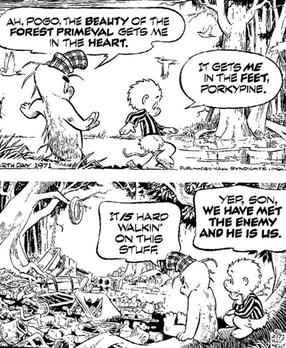
This is a one way street, and the judge has accurately formulated why many think this is the case. We have met the enemy of our freedom and our judicial system.
Bias legally means having sufficient strong views of a legal interpretation or party that these views override the judge's ability to impartially apply the law to the specific facts of a given case.
The "pro-copyright" judges are not biased--they are simpy following the law, which currently holds that copyrights are legal and provides (some draconian) mechanisms for enforcing copyrights. If there are problems, it is not the judges--it is the law.
In the U.S., at least, judges are not allowed to be publicly politically active (except to the extent of their own campaigns for judicial office), or to lobby for political causes at all, though they are allowed to maintain private political views. No copyright lobbyist is a judge, though a few former judges may be copyright lobbyists.
This is not a one way street. The enemy of freedom is not the judicial system; quite often, the judiciary is the primary defender of your freedoms.
I think we can safely assume that unlike the judges in the Pirate Bay case some pressure was applied from above for him to stand aside.
Last I heard there was not going to be a need for an extradition hearing as Mr Dotcom was volunteering to go to the US and stand trial as he was certain he would be found not guilty in a courtroom.
> Last I heard there was not going to be a need for an extradition hearing as Mr Dotcom was volunteering to go to the US and stand trial as he was certain he would be found not guilty in a courtroom
Not quite. Dotcom has offered to voluntarily fly to the US in return for them releasing a portion of his funds so he can mount a defence.
The likelyhood that the US will accept his deal is close to 0.
All jurisdictions which follow British law, or which are based on British law to some extent (like the U.S.) have judicial ethical guidelines that generally require a judge to stand down if he makes statements that indicate or suggest he cannot impartially judge the case before him based on the law or merits that specifically apply.
This judge said "The US is the enemy" while presiding over a case in which the U.S. was the primary opposing litigant. A statement that strongly worded strongly suggests he would not be able to impartially judge the remaining proceedings. Consequently, the instant he made that statement, he was ethically obligated to stand down. In some jurisdictions, not standing down would result in disrobement and potentially disbarrment.
Indeed, in most jurisdictions with these rules, judicial decisions can be struck down for a judge's refusal to stand down after making such statements. The one exception is SCOTUS, because its decisions are not subject to further review except by SCOTUS itself.


A better translation of TPB here: Aftermath of The Pirate Bay Trial: Peter Sunde’s Plea – In His Own Words - Falkvinge on Infopolicy. http://falkvinge.net/2012/07/06/aftermath-of-the-pirate-bay-...