At what point does fallout from trying to avoid covid-19 deaths cause more deaths than covid-19. We're talking domestic violence, starvation abroad (due to local hoarding, which has begun), and actual crop failure (due to a shortage of transient labor). There's also suicide, depression, etc.
I'm not even saying let up on all the social distancing measures. I think social distancing measures are good, but perhaps over the top. Nowhere have I seen a discussion of where to stop with the measures because of diminishing returns and increasingly negative economic (and indirect human life loss) impact.
If you assume a mortality rate of 1% (which is probably in the ballpark) then you can expect 75 million deaths without intervention. So far world-wide we've had about 95,000 deaths. So doing nothing would result in about 700 times as many deaths as have occurred so far. I'd say it's probably to soon to throw in the towel.
A 1% mortality rate is much higher than the ballpark. A recent study which was featured on Hacker News estimated the infection fatality rate at 0.66%. [1]
The IFR represents how many of those who got it and ended up dead (regardless of whether their case was tested, diagnosed or confirmed). It doesn't represent the whole population.
The same study estimated 60-80% of people could eventually contract the disease. 70% * 0.66% = 0.46% mortality rate from the disease. This would equate to about 35 million people globally. (70% infection rate is not going to happen overnight and I would hope that one way or another fewer people get infected than this - on the Diamond Princess where they tested nearly everyone, only about 25% of passengers got infected - but we will see.)
It's important to understand the definitions of all the terms involved. A misunderstanding of the statistics has resulted in panic -- people see a 5% death rate from a specific group of confirmed cases and assume that translates to their demographic, or overall population etc. when it does not.
The mortality rate is the percentage of the total population that dies. The infection fatality rate is the percentage of all cases, diagnosed or undiagnosed. The case fatality rate is the percentage of diagnosed cases. [2]
Not saying it's not a serious disease, 35 million deaths is many many times more than the flu. But we aren't going to lose 1% of humanity to this disease. And personally I would advocate for a smart and measured response like we've seen in South Korea or Taiwan over a panicked and destructive response like we are seeing in the US and UK.
Actually I would argue they are not the same when your solution will force some number of people into poverty (plus in the US cause them to lose their health care).
No one wants to have to think about these numbers, but if you're responsible for making policy, it's very important to have good estimates of how many lives your policy will save and how many it will ruin. If you don't you're just reacting to the latest panic in the news cycle as sadly far too many politicians do.
You're talking about a difference between a massive number of people dying, and a massive number divided by two dying, and then arguing that a massive number divided by two is not nearly as serious.
Nobody knows what the true numbers will be, but only the rough range they'll be in, so arguing over a factor of two is meaningless. These are terrifying numbers either way.
> If you don't you're just reacting to the latest panic in the news cycle as sadly far too many politicians do.
The "panic" is caused by people finally listening to what epidemiologists have been saying for months. False calm has been far more damaging on this pandemic than panic. If politicians had listened to the panic mongers earlier, the world wouldn't be in this situation.
I don't know why you were downvoted. Frailty is an epidemic among the elderly. Once they lose muscle tone and mobility they tend to die quickly. It does little good to avoid virus infection if you end up breaking your hip because of muscle atrophy.
If there's a rigorous nationwide shutdown for 6 weeks, then the economy can partially open up again and people can go out more (people can still go outside now, as long as they stay away from people they don't live with - I know plenty of old people who are in self-imposed quarantine but still go on walks). This also requires the US to build up its testing and contact-tracing capabilities, so that it can keep the virus from getting out of control again.
Unfortunately, the short-sighted rush to reopen everything too quickly, or not to shut it down in the first place, is undermining these efforts. The shutdown worked in China, where it was strictly observed and enforced for several weeks. I hope the US can do the same.
IMF says 500 million people worldwide who were out of poverty will or have returned to poverty because of the recession.
It's a relevant perspective, but I can't seem to find any source for IMF claiming that. Do you have one or are you referring to research publicized by Oxfam[1]?
The average COVID-19 death in Italy is 78 years old and sick.
The average hunger death is going to be young, otherwise healthy, and in the developing world (likely somewhere in sub-saharan Africa).
You can draw your own measures, but I would not personally weight these lives saved equally. I would personally throw several 78 year olds under the COVID-bus to save the life of one young child. I think most people would draw similar lines.
> The first thing that jumps out from the medical history section of Table 1 is that 93% of those critically ill with COVID-19 were “able to live without assistance in daily activities” prior to developing the disease. That typically suggests reasonable health. 3/8
> Secondly, just 7% of 2,124 intensive care admissions had “very severe comorbidities”. That’s significantly less than typical viral pneumonia patients (as illustrated in table 1)
> So 19 out of 20 were free of the most severe life-limiting conditions. 4/8
> Lastly, for now, the age distribution. Most critical cases are aged between 50 and 80.
> People of this age, without severe comorbidities, could reasonably have expected to have years of life ahead of them before they contracted this disease. 5/8
>> The first thing that jumps out from the medical history section of Table 1 is that 93% of those critically ill with COVID-19 were “able to live without assistance in daily activities” prior to developing the disease. That typically suggests reasonable health. 3/8
Not making any comments on the rest of your points, but I have to heavily disagree with this one. Sure, people who have cardiovascular and heart issues, diabetes, asthma, etc. are all "able to live without assistance in daily activities". That doesn't suggest reasonable health to me at all, it just tells me that they are able to live their lives without a caretaker by their side.
And data from Italy suggests that over 99% of the people who died from COVID had existing conditions like those[0].
I think every life is worth saving. Your argument is a slippery slope.
People of old age have contributed to society their entire life and the real perversion is that we should not be at a point where such thoughts make it into public discourse.
That's a reasonable sentiment, but it's not the world we are in, and we will be making economic and health decisions over the next 18 months which will force this tradeoff.
They need to be intentional choices, with an understanding of the costs, where the costs are often paid by people we don't see or frequently think about.
Sweden has by far the worst outbreak in northern Europe, despite a later start than its neighbors. It's also has not apparently peaked yet, where the outbreaks in the rest of Europe have been flat for over a week now (and Italy has started shrinking). At the end of this, it's not at all clear that Sweden will have accomplished much of anything.
The visualization at https://91-divoc.com/pages/covid-visualization/ is IMHO the clearest to explore this stuff. It's based on the Johns Hopkins data set, which is relatively well curated.
Good luck. Sweden is a country which in large has an overwhelming trust in it's government and its intents. There is no part or cultural aspect of Sweden, which inherently believes it needs to arm itself to protect itself from its own government, and even less so as part of its constitution (grundlag)[1]. When told to behave in a certain way, Swedes will follow suit.
Separately Sweden is also a country with an extensive social safety net, where every citizen has the right to free healthcare and every employee will receive 80% of their salary for two weeks without a doctor's note at no cost for the employer[2].
Time will tell if the Swedish approach was the right one and even if so the Swedish case will end up being dependant on rather unique constraints that simply will not map to the US, at least not on a national level.
What is the “certain way” I’m supposed to behave? Sorry, I’ll listen to the governments perspective and weigh it like everything else. I don’t have a gun to defend against the government - I have it in case an individual who thinks they are entitled to my money and my resources get carried away and take it a step too far and try and take it by force.
No, because it's unlikely that 100% of the population will get infected. What disease has ever infected 100% of the population? None. Diseases hit an inflection point in spread, before they fall off. At any rate, how many people died in the wake of the Great Depression? World War 2 was indirectly caused by it. We lost 85 million people when the population was only 2 billion. And that's not even counting the people that died in the subsequent decades when communism took over China and Mao and Stalin had their reign of terror.
This line of reasoning assumes that containment is feasible at this point. Is it? Or will everyone get the virus eventually?
One ironic downside of “flattening the curve” is that it makes it longer. So, barring a vaccine or effective therapeutic treatment, we will all get the virus eventually (but in an orderly fashion, which is good for the health system), and that 75 million deaths will become a reality. Note that’s also assuming a 1% death rate which may be a vast overestimate depending on asymptomatic percentages.
That said, I tend to agree with you that we should keep social distancing in place until we are able to contain new cases, or until we have a much better understanding of the virus itself. At this point there is just too much uncertainty, so it’s better to wait it out until we can establish some clarity and have a better idea of how to approach therapeutics.
I don't think this is true, is it? Most mathematical models I've seen definitely have a much lower number of total infected when the curve is flattened significantly.
Here in New Zealand we are hoping you are correct and seeing signs that you are.
It seems odd to link to reddit graphs - but they are quite good and are up to date.
You're right. Mortality for the virus would significantly increase if emergency rooms are overcrowded. No beds/ventilators = patients that would have survived dying. Last I've heard, around 15% of infected need to be hospitalized.
Availability of hospital beds is certainly important, but about 80% of COVID-19 patients placed on ventilators die. We should deploy more ventilators but even if hospitals run out that will have only a small impact on the total infection fatality rate.
When you start selecting for patients who are the most vulnerable and suffer the most acute cases, it doesn't seem surprising that you can end with a high mortality rate.
There's more to it than that. Doctors actually treating COVID-19 patients in hospitals report that the disease progression is significantly different than the usual ARDS.
If you just let the virus run its course you would have so many extremely sick people at once that it would overrun the health care systems in every country. Many more people than just COVID patients would die, and the death rate of COVID patients would go way up due to inadequate care.
The fallout from letting the virus run its course is way beyond taking the current rates and extrapolating to the entire worldwide population.
Everyone who poses this question can’t seem to fathom that they’re arguing against something that can’t be undone. It’s not lockdown vs. reopening in terms of damage, but a competent, thorough response when this first emerged vs. mitigating the deaths and injuries from not having acted appropriately at the outset.
No one I've seen make this argument seems to have any numbers to back up the "the cure is worse than the disease" argument. The do nothing case is pretty clear 1-2% of the Global population dies. Probably more because once the healthcare system is overwhelmed that percentage goes up.
That is not at all clear. The Nembro article, which based solely on the article itself looks like the ~upper bound on the ~worst case, posits 1% age adjusted deaths. The world population pyramid is very different from Italy's, so I bet it won't even be 1%.
Then, it's not about lives, it's about years of life lost. The average age of the deaths is >80 in Italy, close to that in WA (median is >80, not sure about the average). In years of life lost, one boy who was shot while the lockdown was being enforced in Kenya (iirc) is "worth" on the order of 10-20 average COVID dead (even if you don't weight earlier years of life heavier, which I would). A 30-year-old committing suicide in isolation in the US (acquaintance of a friend) is worth close to that.
Then, if you want a real example of loss of life from a major economic crisis, look at life expectancy in Russia between 1980-2000, or birth rates during the same and GD.
Finally, I would also argue having experienced the former that for (low) 100s of millions of people in ex-USSR, you have to count the 90ies as years at least partially lost, because they were spent in survival mode with giant loss of time and human potential. Personally I'd rather live a good life and die at 80 than throw away my e.g. 30ies working two jobs and trying to find where I can buy cheaper pasta, and live till 85.
Part of this argument, for me at least, isn't number based. I'm of the opinion that culturally we put far too much value on being alive and far too little on quality of life. You can see it in our conversation (here most people just want to talk about death numbers), our laws (ie euthanasia is illegal), and our news cycles.
Everyone dies. All of humanity does not exist for most of the age of the universe, to say nothing of individuals. That's a trite thing to say but it is no less true. Not everyone gets to live a good life, even fewer in situations like this.
Our DNA wants to stay alive, the existential dread is understandable, but culturally I think we'd be a lot healthier if we put more value in quality of lives than the preservation of them. Now balancing this is not easy and I'm not saying in our current situation we should just lift all measures, but if framed that way the conversation starts to take on a different tone than just looking at potential death rates as the overall guiding function.
> The do nothing case is pretty clear 1-2% of the Global population dies.
And the population of the Earth could handle that without a blip, particularly as it is concentrated in the groups with the least economic contribution.
Sure I guess if you think you are in the group that won't be affected that is easy to say. If you wanted to be really crass you might say that since it has a much higher mortality rate among older people it will be a huge boon for government's fiscal position because it will cull the rolls of Social Security beneficiaries.
life is much more than just an economic contribution. Society is made by people that have relationships far beyond economics (family, friends..). Money plays a big part of course but people were also happy when there was less money around. Loosing one (or more) dear one is much more devastating that an economic crisis.
>What’s so strange to me is how much trust is being placed in these test results
This is meme by this point but: it's possible that uncertainty has already been priced in by the markets. I don't think any trader actually thinks the infection rate is exactly what the official numbers are.
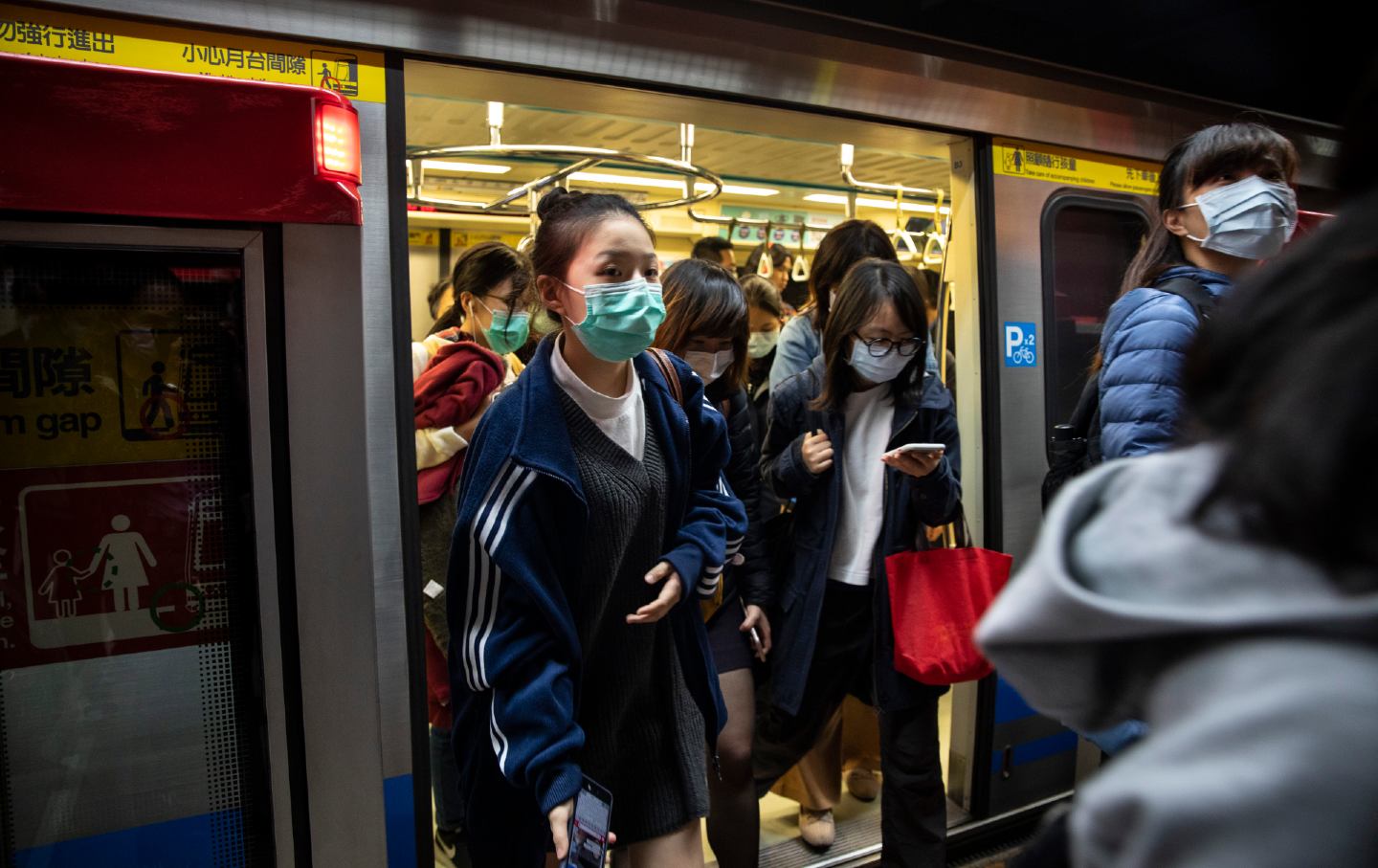
Universal mask wearing is part of the approach they have taken in South Korea, Taiwan, and Singapore and it seems to have largely worked in those places.
The whole "masks don't work" line being pushed by the US government and the media seems to be about keeping people from buying masks that are needed in the hospitals. In the process they are sort of lying to people about the effectiveness of mask wearing as a piece of overall strategy.
No! Mask wearing is definitely not a thing in singapore. Only on 3rd april did the singapore government stop discouraging mask wearing. Less than half the people still out and about now wear masks.
> The whole "masks don't work" line being pushed by the US government and the media seems to be about keeping people from buying masks that are needed in the hospitals
I actually don’t think this is correct, it’s a reasonable assumption but actually the “masks don’t work” has been accepted Western medical dogma for decades. They were giving the same advice years ago even in times of no mask shortage - to only wear a mask when you know you are sick or if you are a care provider. See, for instance, a roundup of research and previous advice here. https://slatestarcodex.com/2020/03/23/face-masks-much-more-t...
I think the main thing that made CDC turn around now was that the number of asymptomatic or very-mild symptomatic patients with COVID-19 who are spreading the disease during the initial infection when they don’t know they are symptomatic really makes the advice to not wear a mask unless you are sick not make sense since you don’t know when you are sick until it’s too late...
Confusion between the different mask standards and their effectiveness is also a point where I think people are talking past each other.
NIH has a study on their website that says basic surgical masks are roughly equivalent in protection or N95's in practical real word settings when respiratory illness is involved. [0]
There is also supposedly a huge supply of the Chinese N95 standard equivalent "KN95" masks available. They are said to be made in the same way but the factories that make them haven't gotten regulatory approval from the US Government.
Why not import KN95's and give them out to the public since healthcare can't / won't use them.
Only with other controls. It's ridiculous and will certainly lead to more deaths to suggest that only wearing certain types of masks is in any way a valid solution of any type.
This sort of misdirected conversation will kill people. Please stop it. It is highly irresponsible.
If you disagree please cite a credible source.
Please do not include anything relating to any of Trump's briefing as those are all discredited and fake news.
You are arguing against a straw man, literally no one is suggesting that masks by themselves are a magic cure all. If masks don't have efficacy then why do hospital staff wear them? The CDC's own guidance for air travel says that people in close proximity with sick passengers should wear masks. In an environment when anyone you encounter is likely to be sick wearing a mask makes sense as part of the overall strategy.
Taiwan has similar population as Australia, is higher density than Sydney AUS, and has a fraction of the cases and deaths. They didn't close everything down they did targeted tracking/testing and isolation of individuals, mandatory masks on transit, fever checks in public etc.
My main concern is: will we actually learn anything from this experience? We have had a couple of small scale trial runs over the past two decades. We got through those fine, but never considered what would happen if the spread got out of hand.
I'm not going to pretend to be innocent here. It doesn't take an expert in infectious diseases or economics to at least prepare themselves and their family. There are also decisions that we make collectively, though not institutionally, that are dubious. Some people are lucky in that their role in society is important enough that they are valuable in this crisis. Others will more-or-less have their value to society restored as soon as this is over. Then there are the people who's social value depends upon economic prosperity. Those people are going to be hit the hardest.
Then there are the institutional decisions. Some of those are the craziest. Organizations to handle domestic violence, homelessness, mental illness, etc. were scraping by in good times. Transient labor is not an issue in itself, reliance upon it is. While I'm guessing that your reference to transient labor refers to seasonal foreign workers from the context, something similar has been created in local job markets. Many people are working several jobs simply to make ends meet. They cannot provide their own safety net in the case of any crisis (personal, national, or global). In the worse of cases, they are providing a vector for the spread of disease (e.g. hospital and nursing home employees working at several facilities).
On top of all of that, we have the government. I'm not talking about politicians here. They are certainly part of the problem when the don't listen to their own experts, undermine them, or simply get rid of those they don't agree with. I am talking about the civil service. These are the people who provide continuity and should be doing comprehensive planning for different scenarios. (Not to mention ensuring that government services can handle emergencies.) What I have been seeing are a slew of half baked solutions that reflect politician's distorted world view that are, at best, addressed after reality is exposed to them.
My apologies for the rant. Part of the reason for it is that I think the wealthier nations will pull through this, but we could have done a lot better if we went into it prepared.
> starvation abroad (due to local hoarding, which has begun)
Is there any evidence that this could happen? I live in a small Northern European country and there have been absolutely no shortages of TP or food items here. Even at peak toilet paper demand, when I went to the supermarket one brand was sold out, but there were plenty of other brands available - the same happens if they have a promotion, so maybe it was just a coincidence.
It seems that most of these issues are caused by supply chain problems, not a lack of available food, and the bigger a country, the harder the impact is felt.
A lot of the common produce items are grown locally, it's mostly out-of-season (tomatoes) and more exotic fruits (mandarins, avocados) that are shipped from the other side of Europe or Africa. Almost all meat, dairy and grain items are produced locally. If we were only able to eat food grown within our country, I don't think we would be faced with mass starvation.
Any evidence? People were already starving in poor countries. Imposing lockdown measures makes the hunger situation worse. If you don't have food today then dying of an infection next week is the least of your concerns.
Industrialized countries will have sufficient food for a while, but if major sectors of the economy are shut down for months then supply chains will break down and we'll start to see empty grocery shelves.
It already happened. The West will be litigating unpaid rent, etc. for the next decade since there aren't enough court rooms.
What we fundamentally got wrong is that ventilators don't work in 66% - 90% of cases, so "flattening the curve" was largely pointless and distracted leaders from low-tech solutions like quarantine centers and palliative care.
We should have learned that in 2002 from SARS-1, but nobody even seems to remember it.
Quarantine doesn't work unless you know who is potentially contagious. The fact that covid-19 is contagious in asymptomatic people and we don't have good testing makes it impossible to isolate the virus without shutting down the economy.
Flattening the curve isn't just about ventilators. It is about keeping the entire system functioning. The simplest example is testing. How are you going to quarantine carriers if we don't flatten the curve, can't keep up with testing, and have no idea who has the virus?
> What we fundamentally got wrong is that ventilators don't work in 66% - 90% of cases, so "flattening the curve" was largely pointless.
Use of ventilators coincides with severe cases, and up until this point we haven't learned enough about curing those infected with this virus to recover all such cases.
Why are you assuming the ventilator recovery rate is static?
We should assume that by "flattening the curve", we've bought valuable time to learn more about this virus, getting closer to better methods of recovery.
Ventilators will always play a role in keeping patients alive who've deteriorated to the point of requiring them.
I don't think anyone had the impression that ventilators cured anything, which your phrasing of "ventilators don't work" seems to imply.
Not sure what you're talking about here. In Australia for example we are flattening the curve and the measures are working. And we simply passed laws to protect the interests of landlords and renters so there won't be some explosion in litigation.
And just letting hundreds of thousands of people die alone, on the streets or in the homes and with no proper burial or funeral is not something people will tolerate. It would be like dropping everyone in the middle of a war zone.
"The largest study so far to look at mortality among coronavirus patients on ventilators was done by the Intensive Care National Audit & Research Centre in London. It found that among 98 ventilated patients in the U.K., just 33 were discharged alive. The numbers from a study of Wuhan, China, are even grimmer. Only 3 of 22 ventilated patients survived" [0].
Cuomo has already said this iirc; most people who go on a ventilator don't come off of it alive. That doesn't make it pointless to even have ventilators though, a 40% survival rate is certainly better than a 0% survival rate for those who need a ventilator.
It's both. You're sedated (comatose) to tolerate the tube and allow the machine to manage the pressure. After a few weeks the air pressure destroys your lungs and the sedation causes you to lose muscle strength. So you get sicker day by day.
I'm still waiting for an interview with a ventilator survivor. None so far.
Sure here's the source. The 66% - 90% death rate on ventilators appears to be accurate but there's a lot of variance in the data and no rigorous studies yet.
"What we fundamentally got wrong is that ventilators don't work in 66% - 90% of cases, so "flattening the curve" was largely pointless and distracted leaders from low-tech solutions like quarantine centers and palliative care."
It's far from pointless.
Flattening the curve means a lot fewer people get sick all at once. That buys time for treatments and vaccines to be developed.
It's also not nearly as overwhelming to the health care system.
Flattening the curve is justified to not overwhelm medical facilities, but the new coronavirus is so infectious I doubt we'll develop a vaccine before we achieve herd immunity.
A lockdown until we develop a vaccine is economically impossible, as it's estimated to take at least a year. A vaccine will be useful for next year's coronavirus.
Thankfully the actual death rate is lower than what the models projected. Antibody testing will do a lot to dispel the fog of war surrounding this issue.
At the very least, you're going to be buying people months, possibly years of life for millions of people by having a lockdown.
If we were to end the lockdown now there would be way more infections and deaths in the short-term then there would be otherwise.
Some deaths may happen anyway due to economic hardship, or social unrest, but the deaths from infections in the short-term are going to be greatly reduced, and even in the long term, the longer the lockdown can be sustained the fewer deaths from infection there are going to be.
In the meantime, the government really has to step up to the plate and come up with solutions to the economic problems, which (unlike the pandemic) are under human control.
There's all this talk of "this is what the virus unchecked leads to, so we can't let up".
I'm not suggesting we throw up our hands and attend tightly packed concerts.
I'm suggesting we stop pushing for an R value of 0, and instead deliberate what the least costly options are (both economicly and in human life) keeping the R value under 1.
We might not be conciously pushing for an R value of 0, but it appears that way.
Your question presumes that if we stop "trying to avoid covid-19 deaths" that we'll experience what we're seeing now.
We won't. US case load stopped growing about 5 days ago because of the mitigation effort. Prior to that, it was doubling every 3-4 days. So just in the immediately verifiable present, there are 2-3 thousand people alive today in the US who wouldn't have been had we not locked down.
That's just today. Let the virus run rampant and you get to the doomsday scenarios that everyone likes to scream about.
The point is that the mitigations are working, and because they are working we have a good measure of how much worse the pandemic could be. And it could be really, really bad.
If you have a better plan, it needs to be proposed and justified. But "let's not do this because of other causes of death" doesn't work, numerically.
Consensus from almost all countries is that you need to quarantine and shut down the economy in order to beat this. Those that believed that they could get around this with herd immunity are either paying a huge price (UK) or about to (Sweden).
And those politicians that took hard measures actually have been rewarded (Australia) and those that didn't punished (UK, US).
We'll find out in a few weeks whether the herd immunity approach is effective by looking at what happens in the poorest countries. Some of them have minimal ability to lock down the economy or quarantine people due to lack of resources, dysfunctional healthcare systems, limited food reserves, and weak governments. So the virus is going to run its course regardless of what anyone wants. It's a tragic situation but there doesn't appear to be any alternative.
Iran isn't particularly poor. Hardly anyone starves to death there. The real test will come when the virus hits places like refugee camps in Bangladesh.
Taiwan effectively stopped the virus at the border. They have only 380 cases and 5 deaths recorded total from the coronavirus.
It’s too late now for countries that have allowed the coronavirus to run wild for months and spread throughout their society to emulate that.
Vietnam is another success story as well I think - 255 cases, 0 deaths.
This is definitely the ideal model to follow which is to prevent the disease from rooting itself within your borders, allowing the economy and society to continue as normal.
Once you have wide-spread community transmission as Western countries do, emulating this approach becomes difficult... I believe the lockdowns are an attempt to effectively reset the state back to a lower number of active cases so that a South Korea style containment of the disease could be attempted.
1. 20% require hospitalization. Hospital capacity is limited.
2. It's questionable whether we can become immune to it. We might keep getting re-infected.
3. It causes permanent lung damage in some patients. Makes re-infection even more lethal.
4. There's a chance that animals can catch it and become a reservoir for it. Imagine if every dog, cat, and pigeon in the world is infected with it, but doesn't die from it.
Yes, it's low probability. But it's not zero. And it's not negligible either.
If untreated, the fatality rate goes up. I imagine OPs figure is assuming widespread contagion and the average 20% hospitalization needed, which would translate to A LOT more dead people. We won’t know the actual death rate after the fact, of course, or how it compares in places where health care is saturated vs not. But that figure isn’t/wasn’t entirely impossible?
I did the math on this a few weeks ago because I was curious. My math was this:
(Population x A) / (LifeExpectancyInYears x 365.25)
A is an unknown variable that equals the what amount of a day people consider as "lost" as a result of mandated lockdown. IE, if everyone considers each day they spend not able to go about their business as a day of their life completely lost than A would equal 1. I suppose some people could consider the cost of a day lost to mandated quarantine as greater than 1.
Anyway, by my calculations based on a US life expectancy of 77.5yrs (28,287.5 days) and a US population of 330 million then that puts the lifetimes lost per day at 11,666. Note, that's lifetimes lost. IE, as if 11,666 babies were born each day, but instead of living the their full life expectancy they all immediately died.
edit: Markdown ate my asterisk symbol and \ doesn't work as an escape character apparently? Changed asterisks to x and the x variable to A.
Well, I don't know. I can't go eat out. I can't get together with friends, but I can call them. I can't play pickup games of ultimate frisbee. I can't go into the office. But I get to hang out with my wife and daughter. (I think that's great, but my wife is less enthusiastic.) I'm getting some things done around the house. I can still take the dog for a walk - I just avoid anyone else who's also out walking. I'm doing somewhat less of what I want, but I wouldn't regard it as "losing a month of my life". I don't like playing ultimate that much.
Life time lost? If you can't work remotely just pick up some indoor hobbies. Learn Spanish or French, learn to play guitar, experiment with electronics, contribute to an open source software, or teach something you know to someone else over video. Life doesn't stop as long as we have bandwith.
I really wish people who followed this sort of thing actually had some integrity and honesty. And by that I mean when they do have an illness or disease that they don't resort to "Western medicine" and instead relied on Gaia to get them through it.


I'm not even saying let up on all the social distancing measures. I think social distancing measures are good, but perhaps over the top. Nowhere have I seen a discussion of where to stop with the measures because of diminishing returns and increasingly negative economic (and indirect human life loss) impact.