Korea is doing drive-through testing with results available in three days. [1] That the US is still at the level of doing testing in a private and haphazard fashion is effectively criminal and seems likely to have a serious impact fairly soon. The US had a difficult time even testing all the workers at the nursing home in Washington where 11 people died.[2]
Everyone keeps pointing to the lack of availability of kits in the US without mentioning the reason. The reason is that the CDC created its own kits instead of using the WHO kits. Why did they do that? Because the WHO kits were inaccurate. Accurate diagnoses happened only ~60% of the time, basically a coin flip. In China the tests were becoming such a problem, now they basically just count anyone with symptoms. That's one of the reasons why numbers jumped drastically. Sometimes it takes up to 8 times to get a hit. Which when you think about it is completely ridiculous. That is with people with full blown symptoms.
The original CDC batch became tainted but were more accurate...unfortunately the CDC version was also giving false positives and didn't meet QC. To make matters worse CDC rules required very stringent guidelines for approval from third parties and states. Most of that has been lifted (I think this is what Trump was referring to when he said he was lifting something from the Obama admin, though I don't think it started with him. But who knows because Trump is often full of bluster.)
I wish people would stop pointing to South Korea and China as the paradigm of how this should be treated. It's entirely possible that the "drive thru" model with relatively inaccurate kits could make things worse. There isn't much point in producing millions of tests if they are no more accurate than a coin flip and can take up to 8 times to properly diagnose someone. Not to say the US hasn't bungled this and wasted some precious time.
The one thing, I'm pretty confused about at this point is how this has spread so quickly in Italy.
1) China and Korea have effectively treated the virus, infections in both those areas have been declining. And Korea now is effectively the lowest fatality rate for any of the effected countries which points to excellent surveillance and treatment. I darn well intent to keep pointing to this.
2) Some article point to the main vector in Italy being patient left in a hospital for 36 hour before being diagnosed and treated. This allowed the disease to spread in the community where testing was not being done - kind of like the US.
3) The Chinese test may indeed might have had problems at various points (your first link is rather anecdotal, hardly proves the test was a "coin flip". Other posters note your links don't back your arguments). The American test had even more problems and still hasn't ramped up to strong production. Making tests is hard, it seems. The CDC's "your test has problems and we know we can do better" attitude looks misguided in retrospect.
4) It seems like you're doing a bunch of speculation with little evidence. I suggest you look at infection and mortality as a basis for thinking about what country is doing well or badly. [1]
> And Korea now is effectively the lowest fatality rate for any of the effected countries which points to excellent surveillance and treatment. I darn well intent to keep pointing to this.
That's misleading. Korea has the highest active case ratio of any of the hardest hit countries. The flip side of the lowest CFR coin is that Korea also has by far the lowest recovery rate of any of those countries.
You need to wait for the active cases to turn into deaths or recoveries.
From JHU CSSE:
South Korea
Confirmed: 7,382
Deaths: 50
Recovered: 118
Existing: 7,214
If you're just looking at recovery rate (also misleading), Iran seems much better than Korea:
I don't know what the criteria for recovery is. My impression is there isn't much of a international standard and so the inter-country comparisons aren't that useful. Iran might have a higher recovery rate but that might be more an artifact of how they measure this.
In all other measure, South Korea is doing well. Avoiding death is much unambiguous a measure.
Edit: Yes, because Korea has experienced an exponential increase in cases, most cases in Korea are "new" but this is true for most other countries - though countries where they only find cases by people dying might be different but not in a good way.
Edit2: Also, it is true that Korea's lower mortality is likely partly a product of Korea's widely testing and finding asymptomatic carriers. But this is also a good thing since it allows Korea to get these people to quarantine and lower the transmission rate, hence the declining rate of infection there.
Numbers per country in general are really hard to evaluate as there is no standard for anything.
Confirmed cases: heavily dependent on tested people. 1500 in US vs 100k in S. Korea makes the comparison useless.
Also, who is tested?
In Italy they started testing only symptomatic people after a while.
China has changed the parameters a few times in these last weeks.
Deaths: are all deceased people tested?
Recoveries: what constitutes as a recovery? Highly variable on a per country basis.
> Edit: Yes, because Korea has experienced an exponential increase in cases, most cases in Korea are "new" but this is true for most other countries - though countries where they only find cases by people dying might be different but not in a good way.
That is the whole point of my comment. There are many countries that would appear to be even better than Korea by your naive interpretation of CFR. Germany, India, Russia, Brazil, Iceland, Mexico, and many other countries have 0% CFR. That just means that like in Korea, the infected haven't had time enough to die.
Once again, "You need to wait for the active cases to turn into deaths or recoveries."
The difference is countries widely affected by the virus; Italy and Iran. They too have exponential grow of cases and would logically lots of new cases.
Sure, countries that don't enough cases shouldn't be compared but countries with an equivalent growth pattern make sense to compare. At the same time, we can look at the total outside China fetal rate and that's about 2%, which again Korea is doing notably better than. All of this is in context of most infection being new, all of it.
Sure, CFR may not be the final rate one sees but that doesn't mean it doesn't give significant information about what's happening.
The point I've been arguing is that the Korean strategy involves finding asymptomatic cases and preventing these becoming more symptomatic cases by quarantining them, getting those exposed tested and so-forth.
One possibility is this means more of those they find are not seriously ill and won't become seriously ill and this reduces the overall CFR, which can be seen in a comparison to other nations with equivalent numbers of infections. This makes sense to me but can indeed only be verified once this whole horrible scenario plays out.
> All of this is in context of most infection being new, all of it.
No. The average time to die after infection is 28 days. Korea has been testing aggressively, and 28 days ago had fewer than 50 cases, despite finding cases earlier in their development. These other countries found cases who were already infected longer. That's why they have more deaths but also why they have more recoveries. You cannot gauge effectiveness of treatment until you've given the treated time to recover or die.
> This makes sense to me but can indeed only be verified once this whole horrible scenario plays out.
This can be verified today by the lower number of recoveries.
> These other countries found cases who were already infected longer. That's why they have more deaths but also why they have more recoveries.
Yeah, and as I already noted, this situation MEANS that these other countries are failing to control the infection because they are finding infections late, which is going to mean more deaths later.
> You cannot gauge effectiveness of treatment until you've given the treated time to recover or die.
Sure, I shouldn't imply Korea does just better treatment rather than that the treatment/test combination regime of Korea seems like the superior model relative to other countries and I think have mostly said that. We can see notably that the infection rate in Korea has dropped off markedly in the last few days.
> this situation MEANS that these other countries are failing to control the infection
I never disputed that.
> Sure, I shouldn't imply Korea does just better treatment
You didn't imply that. You stated explicitly that Korea does better treatment when that statement is based on a gross misunderstanding of CFR data and said you were going to spread that misinformation. ("I darn well intent [sic] to keep pointing to this.") That's the only thing that I took issue with.
> We can see notably that the infection rate in Korea has dropped off markedly in the last few days.
Fine, what I should have said for absolute clarity is:
"China and Korea have effectively dealt with the virus, infections in both those areas have been declining. And Korea now is effectively the lowest fatality rate for any of the effected countries which points to excellent surveillance and adequate treatment."
Instead of: "China and Korea have effectively treated the virus, infections in both those areas have been declining. And Korea now is effectively the lowest fatality rate for any of the effected countries which points to excellent surveillance and treatment."
But this isn't big change. Moreover, I think Korean model - ie, lots of testing - looks good in total and I think I've made clear that's what I advocate.
I would note in China's case, with infections declining everywhere, the fatality rate outside Hubei is fairly low also.
> And Korea now is effectively the lowest fatality rate for any of the effected countries which points to excellent surveillance and adequate treatment."
No, it doesn't. All it points to is that the cases are still active and have not had a chance to die. You cannot draw any other conclusions from that fatality data.
> I would note in China's case, with infections declining everywhere, the fatality rate outside Hubei is fairly low also.
For exactly the same reason. These infections are newer and have not had a chance to die. With each update, the CFR outside Hubei has increased, as expected.
> I think Korean model - ie, lots of testing - looks good in total
I agree that more testing is better. Why do you keep bringing this up? It has nothing to do with the fatality rate.
I agree that more testing is better. Why do you keep bringing this up? It has nothing to do with the fatality rate.
TL; DR; Without sufficient testing, hospitals get overwhelmed and death rate skyrockets. Is this "irrelevant".
...
My Gawd, you are the one who launched the massive detour on fatality rates. The topic of my first comment and topic of the OP was test, now like three days ago. You chimed in several posts down with the argument about immediate death rates not being final death, which I indeed didn't make my clear enough but which wasn't crucial to my point, which was and is about testing and related, about the Korean model being other countries should look to. I guess should say that Korean being at least adequate comes from my reading of press reports on Korea and not just statistical values but gruesomely technical do we want to get.
The thing is, I said from the start and I've clarified above, the fatality rate is an important proxy for how well a given country or area is doing as a combination of treatment and testing (but mostly testing). The infection rate is exponential everywhere the infection is not aggressively controlled so a high mortality rate means the country finding infection only having dying people walk in the doors of hospitals.
In that time, we've seen Italy, with a higher mortality rate spike in infections and mortality, now with 10x the death toll of Korea. And yes, as expected, the mortality rate in Korea is inching up but the infect rate is now steadily declining and it seems clear the total deaths there are going to be much less than Italy.
Yes, TESTING is my primary interest and advocating the Korean model related to that. The thing is that a look at the situation in Korea shows that the whole of society has mobilized, testing and treatment has been reorganized for the particular problems COVID presents - there are regular hospitals and COVID hospitals (or some equivalent).
> Without sufficient testing, hospitals get overwhelmed and death rate skyrockets. Is this "irrelevant".
It is irrelevant to the narrow question of whether the data show that Korea has reduced the fatality rate, which is the point being argued. Deaths from heart disease are irrelevant to the same discussion.
> My Gawd, you are the one who launched the massive detour on fatality rates.
It is not a detour. It is the single point being argued. You made an erroneous claim together with a statement that you intend to repeat it. I corrected that claim to prevent you from repeating it. When discussing that correction, it doesn't matter if you also made correct claims like that 2+2=4.
The "livescience" link is a confusing story which seems to be talking about the US, CDC test: Last week, the CDC had begun to ship about 200 testing kits to labs across the U.S. and 200 more to over 30 other countries so that more facilities could conduct testing for the new coronavirus.... The CDC is working closely with the states to correct the issues in the testing kits, Messonnier said.
The BBC link is about the WHO test, says no one knows what is going on but gives multiple possible explanations:
  One possible explanation is the tests are accurate and the patients do not have coronavirus at the time of testing

  Alternatively, there could be a problem with the way the tests are being conducted... There has also been some discussion about whether doctors testing the back of the throat are looking in the wrong place.

  A final option is the RT-PCR test for the new coronavirus is based on flawed science....  if there is a poor match between the primer and the virus in the patient, then an infected patient could get a negative result.
The Propublica link is about the CDC test: The CDC designed a flawed test for COVID-19, then took weeks to figure out a fix so state and local labs could use it.
Don't use indentation for blockquotes. HN uses indentation for non-wrapped lines non-proportional font.
Use > or " or *
> One possible explanation is the tests are accurate and the patients do not have coronavirus at the time of testing
> Alternatively, there could be a problem with the way the tests are being conducted... There has also been some discussion about whether doctors testing the back of the throat are looking in the wrong place.
> A final option is the RT-PCR test for the new coronavirus is based on flawed science.... if there is a poor match between the primer and the virus in the patient, then an infected patient could get a negative result.
ACE2 receptors, through which the virus infects the cells, are highly expressed in parts of the lung and the digestive tract. They are not in the upper respiratory tract however. The accuracy of the swab test depends on the amount of viral material coughed up in the sputum.
The key point is in “basically” its a metaphor. The test kits have a 40% false positive and alternative test kits which may test using an entirely different method may improve this. If you think a 40% false positive is good I urge you to actually read the who guidelines which both state this information and recommend testing people multiple times over two weeks. Source is who technical guidelines for testing on their site.
A 40% false positive may be acceptable for purposes of quarantining, so long as the false negative rate is low and the percentage of healthy people being tested is relatively low. It'd be a bit like a bloom filter of quarantine. Can this person skip quarantine? Test says okay. Can this other person leave? Test says no, but that's not solid evidence that they have the disease.
The key point is information (more precisely "mutual information"). A positive test gives you information that says you have it while a coin toss tells you nothing.
I’ve seen no evidence of this rate of false positives, only for false negatives (which is a problem across these tests for respiratory illnesses). What’s your source on the false positive rate?
I'm not seeing any references to the accuracy or inaccuracy of the test. They mention a severe case that's negative should be re-tested and that samples from the lower respiratory tract are better.
That is the thing. This discussion started around whether the CDC should have created their test and the claim was the CDC's actions were a response to the inaccuracy of the WHO test. But part of the accuracy of any test is whether the virus in a location at all - if the virus is, say, only in a person's lungs, any test will have trouble using blood or spit.
That might be true about the accuracy of the other tests, but it's not the reason the CDC created their own. The reason, as I understand it, is simply that there was no WHO test when they started and there never would be unless some country got up off their ass and made one. As it happens Germany got their test finished first and the WHO used that, but the CDC were already well down the path of preparing and qualifying their own test for US use by that point and switching to the WHO one would mean abandoning that work and starting again.
The CDC appears to have made an over complicated test with the goal of being able to identify other SARS viruses beyond just COVID and screwed up the reagents in the process.
I’m not aware of evidence that the CDC designed primers are any better, and have read anecdotal evidence that they fail basic QA tests in open source design software used for this sort of thing.
This was compounded by bad regulations which hamstrung local labs from doing their own testing.
I think this epidemic will expose a lot of weaknesses in public health sector globally. Hopefully, we will learn valuable lessons, but I wished we didn't have to learn them at the cost of losing numerous lives.
In the USA maybe we can bring back the pandemic response command chain in the executive branch of the federal government who were all summarily fired in 2018 because the president and his national security advisor didn’t want to keep “people who sit around doing nothing most of the time” (paraphrased) on payroll.
When recently asked about this and his proposals to defund the CDC by the press, he said in response “I’m a businessperson. I don’t like having thousands of people around when you don’t need them. When we need them, we can get them back very quickly.”
what is scary to me is that the average american seems to be ignoring this and are more scared of lice and bedbugs, which are not lethal. telling folks to treat this as worse than lice and bedbugs, has worked in waking up some of my acquaintances. i think because it triggers more of an emotional response, though just a guess.
I think part of it may be intentional. No matter what, and the end, you will get accurate numbers for death, and there's not much that can be done for viral infections, other than cancelling large events and other means of transmission. Some can't be avoided though (elections are happening in the US).
Could the CDC intentionally be avoiding increasing testing to avoid panic? If the numbers are to be believed, no matter what we'll see a sizable number of infected this year and risk losing many of the elderly.
If China thought the same way, we'd be seeing a hundred million patients by now, accompanied by a breakdown of social order. Clearly China didn't think so, so they clamped down on the disease as hard as possible (albeit after missing the initial warning), and they have the disease somewhat under control.
Same is happening in South Korea, Italy, and other places.
No, the CDC created a defective first kit, delaying EFFECTIVE national testing a month. Congress should investigate the reason for this failure. We'd be far ahead if we bought test from Germany or Korea.
NPR had a story about genomics lab that repurposed some of it research equipment to provide some testing resources. Apparently about 70 other labs, including Gate's, did similar and provide backup resources. But a month delay seriously damaged the US response.
The US also explicitly rejected the working German tests, adopted by the WHO, and continued pursuing their own kit, even after they failed the first go around, putting ourselves even further behind:
> But German researchers were devising their own test, which was quickly adopted by the World Health Organization for distribution around the world.
After the C.D.C.’s version turned out to be flawed, the agency continued to pursue it, despite the fact that another diagnostic test was already in wide use.
With F.D.A. approval, the agency could simply have embraced the test used by the W.H.O., Dr. Mina said. The government could do so even now.
“It’s just a very American approach to say, ‘We’re the U.S., the major U.S. public health lab, and we’re going to not follow the leader,’” Dr. Mina said.
> No matter what, and the end, you will get accurate numbers for death
Not necessarily. You only get accurate numbers for deaths if you test deaths. Some countries reporting zero cases may have had deaths that will never be reported. The US likely has also had unreported deaths.
> there's not much that can be done for viral infections
There is a ton of research suggesting it's possible to reduce your risk of death by like 99%. There was metastudy on the front page of HN a couple days ago suggesting that vitamin D3 alone can reduce your risk of death by like 50% for those who are otherwise deficient.
The most recent Cochrane review on Vitamin C suggests that that alone can reduce your risk of death from pneumonia by like 80%.
Those aren't even the only things you can do before getting the virus. And once you get the virus there are like 6 different steps by which it kills you, and there are various things you can take to ameliorate what is happening at each step.
Viruses can replicate up to once a minute, so if you've already been letting it replicate inside you for a couple weeks before taking something to block viral replication then taking something to do that isn't going to do anything after the fact, but it's absolutely a misconception to say that there's nothing we can do for fighting viruses.
The CDC screwed up the tests all by themselves, even the final primers they are using are questionable. Combined with the FDA blocking local labs from testing based on bad regulations, the government screwed up the initial response just fine without any help from Trump.
Trump says anyone who wants to be tested can get tested and the CDC says they just shipped a couple million test kits around the country.
As usual, don’t blame as malice what can be adequately described as incompetence.
Despite the claims that we would have a million test kits out by last Friday, we don’t have them.
Hell, the people in the Kirkland home that is the biggest source of deaths STILL have not all been tested - today they finally got more test kits - 45 test kits for 63 untested patients and dozens of staff.
This was AFTER Trump fired the U.S. pandemic response team in 2018 and completely failed to replace them AND replaced a whole bunch of competent people at the CDC with FAR less competent people, just because they happened to be loyal to him.
It's a mistake to consider this a political issue first. It is a mental health problem that risks widespread damage to civil and social trust mechanisms, and it infects everything including politics. Mental health problems making someone incompetent does not discriminate based on political affiliation. And it can be contagious. Its victims aren't Democratic or Republican or unaffilliated. The victims are rational thought, logical processes, facts, truth, trust, and civility. Damaging those things is intentional because they are basic requirements for accountability. Calling such conversations political, and thus proscribed, helps paper over and silence the necessary conversation. It's the exact opposite of partisan. You are exactly correct to call it dangerous, and it's only going to get worse.
Could the CDC intentionally be avoiding increasing testing to avoid panic? If the numbers are to be believed, no matter what we'll see a sizable number of infected this year and risk losing many of the elderly.
This is the only logical explanation at this point. Or you can replace "avoid panic" with "avoid bad press for Trump".
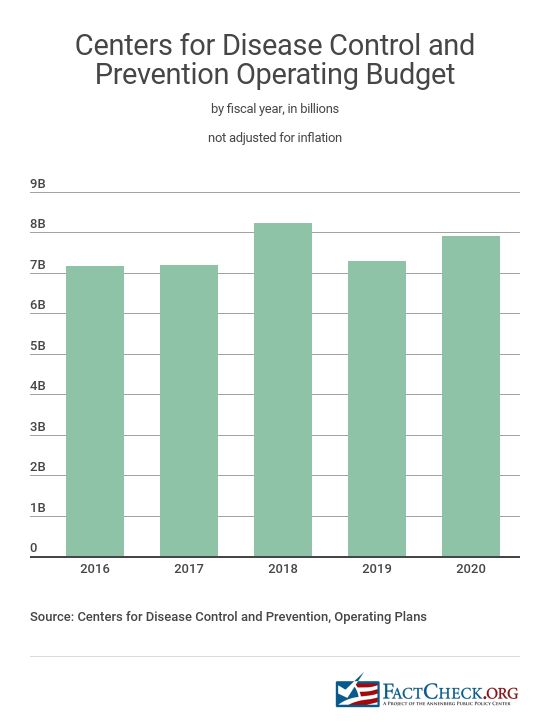
The 2018 funding cuts to the CDC weren't really "cuts" as much as they were the expiry of a 5-year emergency grant to fight Ebola. If it was meant to continue forever, perhaps it shouldn't have been passed as emergency funding...
I don't think you're wrong about the firings though.
Low cost home testing kits can go beyond SARS-COV2 and track other diseases all from the safety of your home. Why go to the hospital where you could possibly be infected by other people with infectious diseases or infect the people around you.
Personally, if it is low cost enough that I don't need to use health insurance then I am all for it. Health insurance is good enough until surprise they don't want to cover you or you get surprise bills in the mail from the hospital.
Gates Foundation is absolutely forward thinking. I like it a lot.
A close friend of mine's wife paid their health insurance for decades, without fail. Their employer changed the insurance provider without notification, but somehow they continued paying the wrong provider. She recently got breast cancer, and now the new provider is denying all claims on the basis that she was paying the wrong provider.
They are basically screwed now after maintaining a non-deliquent relationship with their healthcare provider for longer than I've been alive. If this is not emblematic of what's wrong with our healthcare... IDK what is.
> somehow they continued paying the wrong provider
How does it happen that the wrong (old) provider still accepts money if they no longer cover you? Can this be used as a legal argument that the old provider is on the hook for coverage since they continued taking the money?
My friend paid his health insurance for years. Got diagnosed with cancer (leukemia). Hospital said treatment would cost $750k. Insurance told him to go fuck himself and isn't covering anything.
After ACA there are no lifetime maximums. If it’s an FDA approved treatment which he is eligible for (e.g. there are not other first line treatments which should be tried first) then AFAIK an insurance company cannot simply refuse to pay.
Another option is to move to a Medicare expansion state and stop working, which will allow you to immediately qualify for free health care with generally some of the best coverage you can get.
Insurance companies are free to not cover an FDA approved product. CVS publishes a list every year, although they tend to either be the branded drug when a generic is available or a drug where there are as effective, but cheaper products are available.
It’s a cost versus benefit analysis and no different than what you see in single payer systems.
I will say from experience that oncology is one therapeutic area where payers wield much less control. Insurers don't like bad press and denying cancer drugs is a great way to end up in the NY Times. That said, if a drug is regarded as "experimental" (either the FDA hasn't approved it for that type of cancer OR there is limited data to suggest it works) they will say "no".
Insurance companies certainly can have formularies. I noticed that there aren't any drugs on the excluded list that don't have alternatives listed.
When we change insurance plans my kids have to change the brand name of insulin they get. Humolog, Admelog, etc. But the insurance company can't decide that they won't pay for fast-acting and slow-acting insulin. And if there is a medical reason a doctor will sign off on that indicates a specific brand is required, I believe that you can generally get even excluded medicines covered.
Can insurance companies refuse to cover an FDA approved drug that doesn't have a reasonable substitute? OP discussed treatment for leukemia. An ACA plan should cover approved treatments for leukemia, but it might not cover, e.g. the latest CAR-T treatment if it's still in Phase 3. You would need to get into the study, in which case treatment would be free.
Just to be clear, you mean that the insurance company is not allowed to set a maximum lifetime (or annual, for that matter) limit beyond which they will stop paying expenses, correct?
P
Doesn’t seem unrealistic for a list price. List price for a standard baby delivery and 3 day recovery around here can be up to ~$80k. Of course, the real insurance contracted price is $10k. The list prices are completely absurd, and it’s even more absurd that hospitals try to collect that clearly fictional amount from patients without good coverage.
I do not. They managed to raise about $80k through GoFundMe, and he just found a donor after months of looking. Assuming he will be in debt for the rest of his life, if he lives.
Interesting. Is a defense mechanism to this then to use the healthcare at least once every period you're comfortable with? I have Kaiser Platinum and looks like I'm about to start requesting monthly tests on things.
Co-pay is about $10, so for $10 a month I can guarantee my healthcare is working.
Not only can happen, this is often what happens by default.
You go to a doctor, then the doctor and the insurance have several months of ping pong during which you get about half a ream of "This is not a bill" documents that show a different set of things with different dollar amounts every other cycle, and then eventually you get an actual bill for the largest amount.
If it's wrong, you can spend another year fighting them to fix the billing codes.
combine that with frequently incompetent medical coding, and your insurence ends up not covering stuff they would otherwise cover 100%. my wife is on 3-way phone calls between the billing dept and insurance every month fighting incorrect bills from 6 months ago that did not arrive until 3 months later. she is now basically a better medical coder than the provider. it's a fucking circus designed to make patients pay through attrition alone - it eats away at your morale and free time.
At my company's last benefits meeting (where they go over the yearly changes to our insurance coverage) a coworker described a situation where they had a surgery at an in network (accepted by our insurance) hospital, with in network surgeons and nurses, but was assigned an out of network anesthesiologist without his knowledge, and later got a giant bill for it (well over $1000, IIRC).
Even when a person tries to follow all the rules, they find a way to screw you.
A lot of the practical billing annoyances would go away if the individual practitioners had to get paid by the hospital instead of directly by the patient’s insurance, like subcontractors in any other industry. As a patient, you should be dealing financially with no more than 2 parties: your insurance provider and the hospital.
Very much agree. This is something you learn after a hospital visit or two, and it makes no sense.
Doubly so since, as a patient undergoing examination/treatment, you have zero chance of sussing out who is who, what organization they work for, how their billing works, etc.
All you know is someone came into the room to run a test or otherwise interact with you. It's not like you can interrogate them and then refuse their services -- among other things, they don't even know how their financial org is going to bill you.
"Even when a person tries to follow all the rules, they find a way to screw you."
The whole hospital seems designed to set a bunch of elaborate traps and all of these traps will cost you a lot of money. Whatever I hear there is almost no way to protect yourself besides being lucky.
Maybe before a surgery, gather all of the hospital staff who are going to attend, and record a video while saying "I do not consent to working with anyone from out of network. If you are an out of network physician, I do not consent to be your patient." That ought to be interesting in court if they bill you. Really, the onus of responsibility is between your insurance company and the hospital (i.e. paying and billing party). If they fail, it needs to be something resolved between them. Because that's their fucking job.
You clearly haven't dealt with these guys. The hospital can charge whatever it feels like and the insurance pays whatever it feels like. And the patient sits in the middle and has to figure it out.
I have dealt with them, once, and I got the pokey end of the stick. I honestly don't know what would work, but I think operating on someone who has specified that they don't consent is kinda the definition of criminal; I think Mayhem would be the official charge.
You would think that repeatedly charging people for procedures that never have been performed would also be viewed as criminal but they get away with it all the time.
In my family we had a situation like this (slightly different issue: whether or not a certain procedure was covered). The hospital had the insurance company RECORDED ON A PHONE CALL stating the procedure was covered. They still refused to pay. Also interesting that the hospital apparently routinely records their calls to insurance companies..
And no, the onus isn't on the hospital. They want their pound of flesh even though they assumed you the procedure was covered on the basis of their staff calling your insurance company.
Look up a legal concept called quantum meruit - you can be on the hook for things you didn't consent, on the grounds that your needs were not foreseeable and a reasonable person would have consented if they were conscious at the time. I am of course over-simplifying but HN isn't the place for a long discourse on medical litigation strategies.
I am familiar with the concept (still think it's insane though; I value my freedom of choice more than my well being). I came up with this idea because it records me expressly refusing consent to the doctors if they are not in network. If they still operate, and are not in network, I'll see them in court with video evidence of malpractice and mayhem. I'm sure in the US legal system this has a low probability of success, but hey, maybe I can crucify them on the news for it.
My mom had a very mild form of breast cancer 10 years ago, caught in the earliest stages and hasn’t reappeared since. Last year, her oncologist had to get creative with billing codes, because the insurance company changed mom’s coverage so that yearly screening was no longer “preventative“, and thus not covered. No warning, just a huge bill when she went to pay the copay and leave. The insurance is through her job as a teacher in a large county, and is generally a very comprehensive plan. It would be a gold plan of some sort through an Obamacare exchange. Never underestimate the callousness of the American health system.
This happens all the time. A colonoscopy is covered, but if some random not quite perfect thing is found that they snip out just to be on the safe side, then colonoscopies are never again covered.
Almost everyone I know has a nightmare healthcare story. We have the worst healthcare of a first world country. Many folks who have employer provided healthcare from top tier tech companies are kinda happy but anyone who is below the 50th percentile is living on the edge and playing a gamble.
I’m a solopreneur and we’ve decided to go without health insurance. The ridiculous premiums + super high deductibles mean even if you were to go to the doctor, you’re still paying full cost.
The gamble is you want to avoid any catastrophic visits which would cost 20k+ to offset the insurance deductible + premiums.
Compared to Australia, US healthcare system would be considered a joke.
We're already out of pocket about US$1000 this year with basic check ups, lab tests, and one allergy test (more to come) for my SO. That's with one of the best employer provided healthcare benefits I've ever had that has about $400 a month in premiums.
If I need a sleep study or further surgery as already recommended then we are looking at $4-5k for that alone not including followup, medications, supplies, or other appointments.
Without the ACA I might be dead today due to costs and availability like if I was denied insurance based on pre-existing conditions and could not afford medical care I needed over the last 5-8 years plus mental health care. My parents paid about $22k out of pocket for a surgery I needed during that time (and on their insurance).
I'd have about $45-50k in the bank if my healthcare over the past decade was 100% covered. That is about 10x my current retirement savings or could be a down payment on a house. The USA is not representative of first world countries or at least should not be directly compared to them when it comes to health care.
Yes it happens in many countries. For example in UK someone mentioned they have Phenylketonuria and their NHS will not cover a medicine Kuvan that would improves their quality of life by allowing them to consume a reasonable amount of protein.
The NHS negotiates prices directly with drug companies. Usually this situation happens if a drug company refuses to offer a reasonable price. Yes this sucks for anybody who depends on such a drug, but there is no alternative.
This is misleading at best. The NHS Comissioning Board has commissioned Sapropterin for use. However, due to its extraordinarily high costs and limited efficacy compared to maintaining a restricted diet, it is only prescribed in scenarios where there is an urgent clinical need for treatments like Sapropterin.
Most likely that was based on a cost benefit analysis involving QALY. Which is logically a reasonable way to figure out how to spend Healthcare dollars. The US system is not.
This is really important, especially in countries where flu season is coming.
At the same time, I’ve been reading papers in top journals about various clever technologies to do rapid (ie <60 minutes) detection of pathogens for years. The latest was using crispr [1]. None of them seem to have left the lab, PCR is still it.
Final point, nanopore sequencers are ideal for rapid home testing, and you get the actual sequence. They are a bit too expensive unfortunately.
We need some states to just start defying the CDC and doing whatever testing they deem necessary. With media backlash and sympathetic juries, no court case will actually succeed if the feds try to charge them with anything, and this is a life-or-death matter. Italy is a first world nation doing testing, and even they are swamped—what will we be in a week?
The new fed law and my state make the test itself free, but dont address the high service charge at some medical centers. Sick people might be reluctant to test as early as they should.
the irony is that if these are not already FDA-approved devices, then selling them (and even giving them, I think) to consumers will be illegal.
it seems clear that the regulations would be harming the public interest and should not be enforced, but you could imagine a scenario where there was a politician with a political grudge against a liberal city like Seattle.
This is great news. We can learn from this pandemic that during Public Emergencies, humanity needs to come together and defeat our threat - democracies are thought of as a "giant ship" that's impossible to move during emergencies and cannot compete with authoritarian regimes such as China where a drone escorts you back to your own house; this kind of exclusionary and temporary exceptions backed by scientific consensus and truth (which is often clouded by the fog of authoritarian stronghold on censorship), we can be as nimble and come out more educated than ever.
Emergency powers in the western democracies (North America and Europe) are an important aspect of governance and should be routined examined for effectiveness (mock exercises and simulations), efficiency and combating the threat during the most dire times. Coronavirus is not an existential threat but as a thought exercise we can imagine one that has a serious chance of killing 50% of the earth population. Or some serious evil on planet is threatening human existence on earth - incoming asteriod or terrorist organization with AI capabilities. I sound like an alarmist, I know, but the point of this thought exercise is not to induce panic but build a better governance system that can protect the public without giving up civil liberties.
Not really that clear. Im sure the gates foundation is pretty legit, but if scammers started selling home testing kits that didn't work that could definitely be a threat to the public interest.
Seattle's lucky to have a benefactor, though it may highlight yet again the stark differences between the have's (in this case a rich tech companies) and have not's - everyone else.
From what I’ve seen, a lot of the false negatives with these tests comes from the fact they require two swabs (nose and throat) that must be performed thoroughly/correctly in order to get a viable sample. I wonder how home testing will impact efficacy.
To me, it seems odd that government would have a monopoly on anything in health care. Non-profits can play a very valuable role in exposing inefficiencies in large bureaucracies.
I don't think I implied governments should have a monopoly over health care? There are many other options. For example, I'm wondering why isn't health insurance covering testing? It'd save them money if it helped limit the spread of disease.
It would make sense if everybody were insured. However they really would want everyone to get tested, not just their customers, for the reason you cited. If anything, they should be incentivized to make their own foundation to give it away, like Bill Gates is. Car insurance companies have pooled together to form the Insurance Institute for Highway Safety for crash tests. So such things can come about.
Playing a role in exposing inefficiencies, and fulfilling basic needs, that governments and health care systems in far poorer countries across the world have had no trouble doing so, are very different things.
This appears far more of the latter.
I mean, the article says they will be able to do about 400 tests a day.
That’s a fraction of the number of tests poor developing countries have been doing for weeks now.
Saying that the US reached its current position in the world solely due to the work of rich people is an incredibly simplistic view of reality.
It also doesn't address the point the parent comment was trying to make. Bill Gates worked hard and now he's rich because of it--why does that mean U.S. citizens need to depend on him to stay healthy?
I will automatically have the biggest house in the neighborhood if my bank is willing to write me a blank check and I use it to build a billion-dollar house.
Biggest economy != healthy economy if you can borrow like there is no tomorrow. And thank you, all you suckers in the rest of the world.
What the parent is referencing is the Republican strategy to defund government services, and then point to how ineffective they are, thus providing justification for privatization.
Except these agencies have never had so much funding as they do now.
Its hard to put a finger on exactly why they seem entirely incapable of fulfilling their central mission during this crisis. Why were the test kits botched? Why was testing so artificially limited? Why do the primers seem poorly designed? Why does the contact tracing seem to be so behind the ball? Etc.
I think political finger pointing is easy and maybe even satisfying but not helpful or particularly enlightening.
You can't just put a government agency in cold storage and thaw it out when you need it. If the budget and leadership get slashed (as they were in 2018), people move on, hard-won lessons get forgotten, and they take a while to get back.
If this happens repeatedly, you lose the ability to attract talented people for a long time.
Politico has a good piece[1], but with no real answers.
But neither the CDC nor the coronavirus task force chaired by Vice President Mike Pence would say who made the decision to forgo the WHO test and instead begin a protracted process of producing an American test, one that got delayed by manufacturing problems, possible lab contamination and logistical delays.
This seems to give some kind of explanation of what was going on:
But there were additional problems with the administration’s approach to testing, according to experts and former officials. From the start, the White House focused on containment, trusting that a limited ban on travel to and from China could somehow force a fast-moving virus to stop cold when it hit the Chinese border. But, while containment might have helped buy the U.S. some time, without aggressive domestic surveillance through testing, it was an incomplete strategy.
Except that doesn't really explain why the CDC didn't do it's job. Surely the White House wasn't actively stopping disease surveillance?
The CDC just "had" to make their own test probably due to a combination of regulations and NIH syndrome (no pun intended). It wouldn't have been such an issue if they didn't fail so spectacularly at designing a test.
From what I gather, designing these things is not actually rocket science, more like grad-level work. The fact that local labs throughout the country were ready to go with their own self-made testing kits supports this.
The focus on containment by the White House IMO was totally appropriate. When you have zero local cases, that's what you focus on... in order to buy you time to prepare, shore up supplies and disaster plans, and distribute test kits. Containment (i.e. closing borders) is the political part of the process, so the Administration focused on that while the scientists are busy designing and distributing the test kits. In theory...
Containment is absolutely appropriate - and can and should be done within the country as well as border restrictions.
But it doesn't seem there has been much focus on that at all. Containment requires rapid large scale testing. The US doesn't seem at all prepared for that.
The thing is that Trump indeed seems to be following the standard corporate CEO script: "stop bad news by any means necessary, then sweep the rest under the carpet when the press isn't looking". But this doesn't quite for running an actual country /s/understatement.
Hate to break it to you, but nearly all governments are led by idiots who don't know anything and don't care to know. Becoming a non-idiot is hard, time consuming work that's incompatible with politics needed to get elected into a public office.
At least our executive branch had enough common sense to ban flights from China on Jan 31st (and was panned by the "free press" and Democrats in congress for it at the time). Had they not, we'd be dealing with tens of thousands of infections and thousands of deaths by now, as exemplified by Italy.
And yet somehow most other countries have still managed to come up with a significantly more competent response. Germany is tracing contacts of all cases and has capabilities to test 20,000 people per day. How many is the US testing right now? And that's a country with 1/3 the population.
There are probably thousands of infections in the country already, we just don't know it yet.
Now try Italy or South Korea. Germany still has twice as many cases as the US, and 7.5x as many cases per million of population (12.1 vs 1.6 CPM in the US). Proximity to Italy doesn't do them any favors. To their credit though, they have zero deaths.
If you order the stats by cases per million, the US comes in 40th, so containment doesn't suck too bad, compared to others. By deaths it's the 5th though - the main cluster basically took out a bunch of very old, medically problematic folks at a senior care facility. As the officials from the facility said, about 7 people die there per month under the normal circumstances, but this month they were additionally hit with the coronavirus. Bad luck.
The issue is that Germany is testing ferociously while in the US this is not the case. It's therefore likely that the US numbers are severely underestimated, while Germany's are much closer to their true value.
Worth noting that Germany not having any deaths despite such a large number of cases can also indicate that they discover the infection very early, and similarly the number of US deaths can indicate late discovery.
> Italy on Jan. 31 suspended flights to and from China, Hong Kong, Macau and Taiwan in a bid to prevent the spread of the deadly coronavirus. The ban, due to last until April 28, was the first by a European Union member. The Czech government later followed suit.
You're already on your way to having tens of thousands of infections.
But because it's absolutely false that "all governments are led by idiots", countries with good health care systems are raising awareness of the severity of the issue and taking effective measures.
The US isn't a first-world country; but it is a very rich thirld-world nation.
Tens of thousands would be a great outcome actually. Tens of thousands of infections would mean only single to low double digit thousands of deaths - lower than the flu. 45 million people a year in the US suffer from the flu, and anywhere from 30 to 60 thousand die of complications. 30K dead, therefore, would be "business as usual", as strange as that sounds. Anything lower than that would be "better than usual".
Please stop with the disinformation. The govt didn't stop flights from China, it barred entry from China to non-citizens. The only reason our numbers of confirmed cases aren't much higher are due to a lack of testing. I think you know full well that just days ago Trump was saying in a press conferences that there were only 15 cases and the number would soon be zero, and likewise was saying at the CDC a couple of days ago that he'd rather cruise ships didn't dock and cause the numbers to go up.
Yes, US citizens, permanent residents, and their immediate family members can return from China, with some conditions: "Americans returning from China will be allowed into the country, but will face screening at select ports of entry and required to undertake 14 days of self-screening to ensure they don’t pose a health risk. Those returning from Hubei province, the center of the outbreak, will be subject to up to 14 days of mandatory quarantine."
When you're a billionaire you're probably very diversified, and such foundations can serve as convenient vehicles for shuttling money between interests while giving a tax advantage and buying social favor, and who knows, you might manage to actually help some people along the way.
Hypothetical example: Gates sits on the board of the medical company producing covid test kits and holds a large stake. So he directs his foundation to buy huge quantities of the kits and give them away. Gets a number of birds stoned at once.
Here's something I could say about these accusations:
"Interesting, this sounds like something a Koch-funded hit-job on Gates would say. In fact, it also sounds like what a spokesperson for Big Hand Sanitizer would say. Or really, if you think about it, if there are aliens immune to SARS-CoV-2 who want to cleanse the earth, this is a reasonable first attempt as they gauge our reactions."
It is easy to generate adversarial hypotheses with non-zero probability. But that's not an intelligent way to live one's life. It leads to poor life outcomes if effort is not spent on those hypothetical outcomes proportional to their likelihood (and I suspect, in this case, merely stating the hypothesis has exceeded that effort threshold).
The HN folks love Steve Jobs, who paid himself in backdated stock options[1] to get the long term cap gains discount, and took $1/year salary to avoid paying income and social security/payroll tax.
I don't get why the people elect presidents and parties whom interestst clear don't align with theirs. They elect people which promise them they will basically destroy governmental institutions and THAN complain the the government doesn't work. That's like ordering poisoned food and than complaining about the cook...
Yes, a plurality of electoral votes. In Congress, it's a plurality of popular votes. The point is that elected officials were not voted by as much as 50-60% of the people who showed up to vote.
Look into public choice theory. Some voters even see an advantage in incompetent government, in the sense that they think paralysis will preserve a status quo and this is more productive of stability than well-intentioned change that may ultimately go in the wrong direction. It even kinda works as long as you don't have any external shocks; the US has maintained a very long economic expansion (at least on paper) despite a longish period of divided government that has resulted in relatively little getting done.
Of course when an external shock does hit an incompetent or paralyzed government the results can be catastrophic, as we're seeing now.
elected representatives aren't perfectly rational robots that take in each of their constituents' inputs into a fancy weighted matrix and produce a vote accordingly and without concern for anything else. in fact, a big issue is that upon assuming office one's priorities can (and often do) immediately shift so far as to essentially ignore whatever was promised while campaigning - there aren't exactly contracts or anything. it's not uncommon to just blatantly lie about what you'll (not) do then do it, especially if maintaining/increasing power level is on your list.
a better analogy would be something like: your options are ordering one of a few dubious multi-year long supplies of food [politicians] from a couple of entrenched vendors [parties], without any real assurances of what's under the covers [promises, etc.], and with a hefty dose of marketing and falsehoods surrounding all of them [us vs. them, tribal stuff]. or trying to do it all yourself [run for office yourself], which is a huge undertaking and draws ire/counter efforts from all the established players.
What “greater good” are you talking about? You think people just love Bill gates so they want to live in a dystopia for him? Is the “greater good” Bill Gates’ bank accounts that keep getting bigger every day, despite his perpetual generosity?
Feudalism is an pre-industrial, primarily agrarian system of socioeconomic relations in which peasants farm land controlled by nobility in exchange for military protections.
In Feudalism, the single incentive for the nobility to protect the peasant is the exchange value of the product of the peasant’s labor. Feudalism is best known for it’s lack of democratic relations.
It’s not that the president wants citizens to die per se. It’s just that he is incapable of understanding/comprehending the threat we are dealing with, and is also acutely sensitive to perceived threats to his own personal fortune or reputation, which are his #1 priority in every situation.
This is a good reason to have people with basic quantitative competence (or at least folks willing to listen to experts with quantitative competence) and a certain amount of imagination in leadership roles.
What’s the point of testing? There is no treatment. So knowing you have it or not is pointless. If you have it, and it’s serious, you’ll seek medical attention regardless of whether you know it or not.
When you see the ridiculous on hand sanitizer and toilet paper, even if there was an over the counter version, you wouldn’t be able to find one in the store.
Don't people have low level symptoms basically all the time? Like if you add up all the times your throat feels a little bit sore, or nose is a little bit stuffed or you cough a few times a day or you have a bit of a headache or you feel a little bit lacking in energy... That should add up to like half a year.
So I'm not sure if what you are proposing is realistic.
If I have it, I know to self-quarantine. That's useful to me because I don't want to infect people. Listen, normally, questions like this are useful but this one is obvious.
If you experience symptoms you should self quarantine. If the test comes back negative, you’ll just keep testing yourself until you find out you have it?
1. To give epidemiologists and public health officials a better picture of how widespread the virus is.
2. To make it more likely that infected persons isolate themselves to avoid spreading the virus further.
They get that data the same way they always do, from people seeking medical attention. People who are symptomatic for anything ( flu, cold, etc) should always isolate themselves.
What’s madness is asymptotic people testing themselves.
There's a lot we don't know about this new strain of virus, which makes it hard to contain it. Testing provides data points. I'm not sure why it's so hard to understand that having more data as opposed to less when facing an unknown is a good thing.
If anything sets a bad precedent, citizens starting testing themselves and each other, what could possibly go wrong (sarcasm)...
Should we test for flu, cold as well? All other diseases? Should you only be allowed to be somewhere if you tested yourself within the last N hours ... etc .. because that is the next step, looking at each other with suspicion.
When did you last test yourself? Did you not test yourself? Why not? What are you hiding? What kind of citizen are you? Get back there and start testing yourself.
Are you going to test yourself every day? When you sneeze? In the morning, in the evening?
You're not thinking clearly here. Home disease tests in the form of a thermometer are very common; the "next steps" you describe simply don't happen outside of pandemic situations, even though there's no technological or legal reason they couldn't.
taking someone's temperature is a well-known concept with long tradition - fever is not something that started occurring in the last two weeks.
if people would did not know what fever meant and how they should act based on a reading on a thermometer what benefits would distributing thermometers have?
Tests like this have false positive rates that are significant. The test may be a useful tool when we already reasonably expect someone to test positive (showing symptoms plus contact with a known case or travel from an affected area).
However, if you have no reason to believe you are infected, a false positive might easily be more likely than a true positive. And in fact, even a very modest false positive rate would still make it orders of magnitude more likely than a true positive.
Consider that even if you assume the worst about the state of the virus in the US, it's probably a few thousand people. If you randomly tested every person in the US, and the test had a false positive rate of only 1%, you would have thousands of times more positive results than real cases. Someone else in this thread mentioned an existing test that might have a 40% false positive rate.
This is mindless hysteria. And I suspect you know it. On the other hand, maybe you do, in fact, believe it. Let's make a good faith attempt to test how truly we believe in our predictions. I predict that the Gates Foundation permitting home testing in Seattle will not result in Seattle's public transit system only permitting COVID-19 tested individuals by the end of 2020. In order to back that, I will put up $1000 at even odds. Reply here to take me up on it.
What's your prediction and will you back it like I did?
Not sure why you assume "hysteria" on my side. My opinion could be wrong, but that does not make it a hysteria. Isn't the fear of COVID more a hysteria?
As for your bet - it is overly specific - there could be thousands of similar, equally negative outcomes that would not be in Seattle, or a bus company, etc yet could all be triggered the same way.
I would be most worried of people that want to infect others about finding out anonymously that they are infectious.
The Gates Foundation is only issuing home testing kits in Seattle so it's hard to argue for elsewhere. However, I'm comfortable negotiating the terms. What are yours? I'd like to have a conclusion within a reasonable time so no bet lasting 50 years or anything, but otherwise, let's hear your offer.
EDIT: Due to old comments, I'm rate-limited on this thread so I actually cannot respond (sorry!). I'm interested specifically in the statement about the bus.
"never works like that" was meant to reflect that naive, knee jerk solutions never account for all the complexities of the problem and do more harm than good.
distributing COVID tests to the population is a ridiculous idea that does not do anything but create more panic and trouble.
The problem that needs a solution has nothing to do with whether Random Jane can or cannot (in the privacy of their home) determine if they are infected.
For what is worth, there are people out there, not even few, that would knowingly seek to infect others especially if they themselves suffer almost no effects from the disease. They would do it just for the "lulz". Have you considered that? Being infected, knowing it and suffering no ill effects is an evil superpower.
This is FUD. Comprehensive testing and isolation is the only thing that can contain a pandemic. There's so little data available every additional point is valuable.
There is absolutely not tons of data, the CDC and FDA have been trying to manipulate the infection figures by preventing people from being tested. Have a look at this thread from a former FDA commissioner, which was posted on Feb 2(!) https://twitter.com/ScottGottliebMD/status/12240422206653071...
It took another month for things to seriously change after that was posted. South Korea, a nation of 50 million people, has tested 150,000. The US figure is hard to track but it's at around 2,000 right now. There are almost certainly thousands of people in the US who are infected but have not been tested.
There is literally almost no data. We are barely testing at all in the US. And even if we were, the goal here isn't good science, it's preventing deaths. People who get tested "random Joe" at home and get a positive result are less likely to infect others.
Someone sitting in their house is testing themselves is not data! You are confusing data with a number that ticks up. Ha, another infected! Look DATA!
The potential for misuse, abuse, panic and trouble is far bigger than you imagine.
The problem here, with everyone, is that they think that the rest of the population will act like them. Take a test, then if positive but you are not showing any symptoms lay low for a week, avoid contact with others. This is the most common outcome of the disease, 99% of cases nothing will happen. You don't need to do anything at all, clears up on its own. For each one in a hospital, hundreds did not need care.
But no, that's not what would happen at all if the population started self-testing itself. Everyone positive, yet in no need of medical care will rush the emergency, severely impacting health care providers - that will kill more people than COVID itself.
The upheaval this self-testing can cause far exceeds whatever marginal benefits it would produce.
> This is the most common outcome of the disease, 99% of cases nothing will happen. You don't need to do anything at all, clears up on its own. For each one in a hospital [...]
This is where you're off the rails. You're thinking only in terms of danger to the infected. There aren't going to be hospitals in a pandemic!
The problem with this is that that behavior (i.e. "You don't need to do anything at all") tends to infect everyone around the sufferer! And if the virus is a routine flu where 70-80% of the population is immune, that's fine. It spreads a little and stops.
This doesn't work like that. No one is immune to a novel virus. This will spread across the world and infect whole ?!@#$%! cities at once, overwhelming health care facilities with infections that in a normal situation would be trivially treatable in a hospital. But we'll run out of hospital beds given your insane advice, and people will die for lack of care. Seriously, in worst case scenarios literally millions of people are going to be dead by next year in a situation where we could have saved them had we simply done obvious stuff like testing and quarantine and not told them (sigh) "nothing will happen. You don't need to do anything at all, clears up on its own."
Stop this. Stop it. Stop listening to whoever is telling you this nonsense. It's going to get people killed.
Tests are probably not handed out without instructions about the protocol to follow (do not go to emergency, you will be sent back when you do not have severe symptoms etc). If these are not then you pointed out a clear improvement possibility, problem solved.
I think the massive usage of self tests is a very economical way to contain the outbreak.
No, I do not mean the price of the test, I mean the macro economics. Lock downs may be avoided because only infected people must be isolated but the rest can continue to function efficiently.
Even if the containment is not possible by this, it may help to slow down the spread to the level where the health care system could handle severe cases (it is going to be very difficult when spread grows out of control - https://www.reddit.com/r/medicine/comments/ff8hns/testimony_... ).
I think that not doing massive testing that is going to be only possible by self testing will create much larger harm.
Edit: the method provided by Bill Gates is not a self test. It is just a way to collect samples. The test will be still done in the lab.


[1] https://news.sky.com/story/coronavirus-south-korea-uses-driv...
[2] https://www.nytimes.com/2020/03/07/us/coronavirus-nursing-ho...